
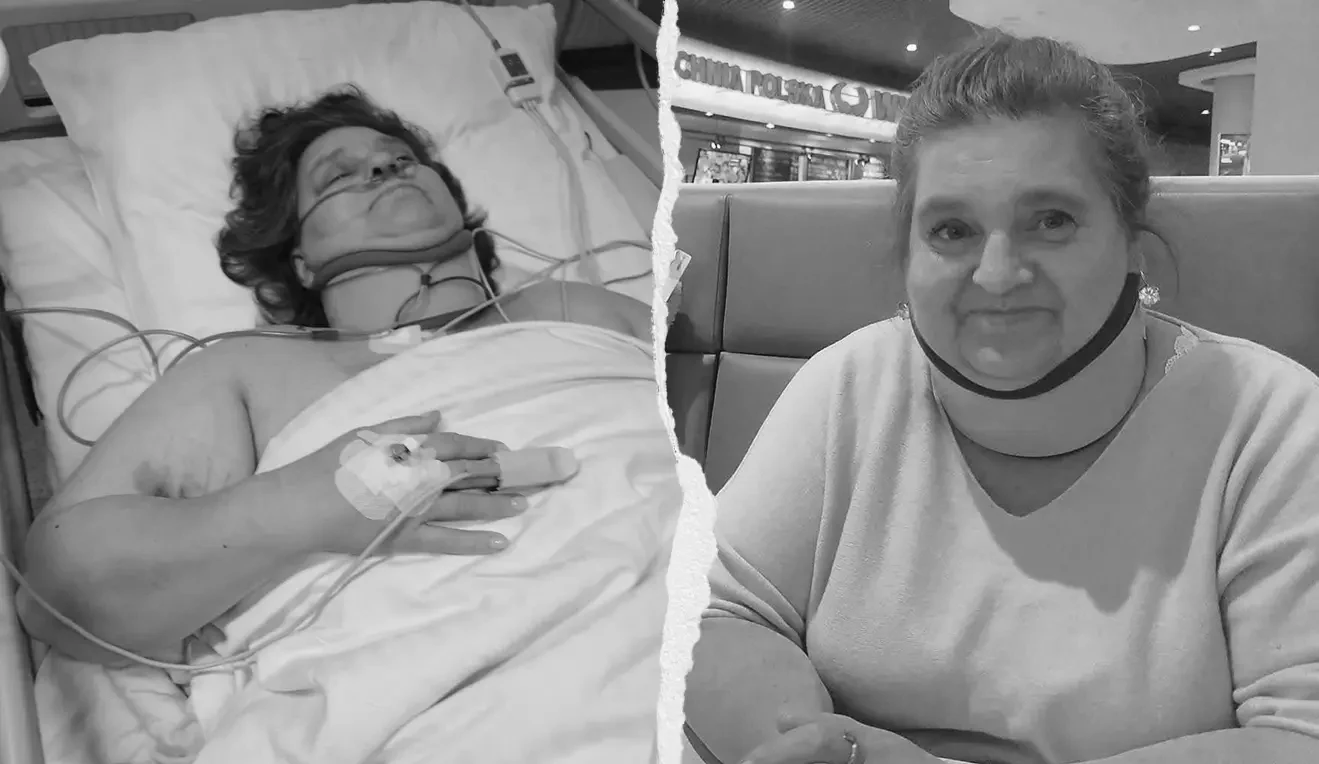
The onset of the disease did not indicate cancer.
The first sign was not a cough or shortness of breath. It was back pain. A simple bend resulted in a broken vertebra in the lumbar spine. It was only in the hospital, in February 2023, that it turned out that the cause was much deeper. Lung cancer with metastases to the spine.
The diagnosis was clear and merciless. Malignant lung tumor, adenocarcinoma with small papillary component. Metastases to the L4 and C3–C6 vertebrae. At the time of diagnosis, the disease was already advanced.
The operations saved lives, but did not end the fighting.
The year 2023 brought a series of difficult decisions and extensive procedures. First, a lobectomy was performed, removing the entire lobe of the lung along with the tumor. This was followed by spinal surgery with resection of the metastasis and stabilization of the L3–L5 segment.
But that wasn't the end. The disease appeared in other places, forcing further interventions. Radiotherapy of the lumbar spine, then the cervical spine. Progression and further metastases involving the cervical vertebrae C2–C6, thoracic vertebrae Th2–Th4, ribs, pubic bone, sacrum, and femur. Each subsequent medical decision had the same goal. To slow down the disease. To reduce pain. To gain time.
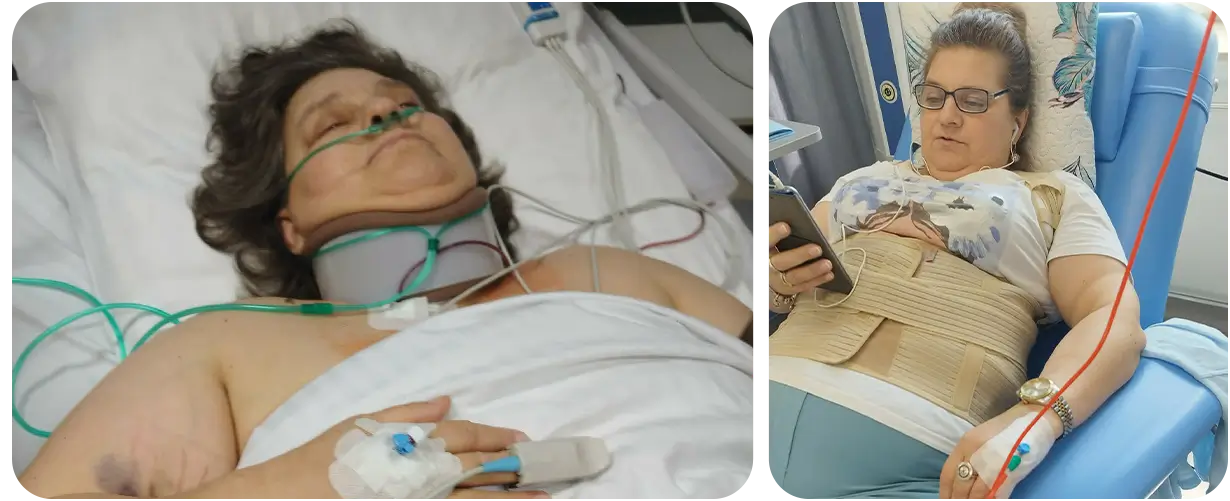
Palliative care and another blow
Since January 2025, Renata has been receiving palliative treatment with osimertinib, supported by zoledronic acid therapy. This treatment does not reverse the disease, but allows it to be controlled and kept as stable as possible.
Unfortunately, another metastasis has appeared. This time in the liver. This is the next stage, which puts even more strain on the body and mind, compounding previous experiences of pain, mobility limitations, and progressive weakness.
Loneliness as part of everyday life
Renata lives alone. She has no permanent care from her loved ones. Her siblings live far away and help as much as their daily lives allow, driving her to medical appointments and assisting her with shopping. The social assistance she receives amounts to about twenty hours per month. This is only a fraction of the support she needs in a situation where the biggest challenge is getting out of bed, washing herself, and performing basic daily activities.
Long-distance family
The disease has robbed Renata of the opportunity to fully participate in the lives of her loved ones. One of her daughters lives in England. The other recently became a mother. Renata does not have the strength to be with them as much as she would like to. Contact is limited to conversations and brief moments, which are never enough. She used to travel and spend time with her older granddaughter. Today, most of her energy is consumed by fighting pain and organizing the next day.
